SOSA Gluconolactate – For Reverse Spherification - Canadian Distribution - Ships Free Within Canada on Orders Above CAD $199
SOSA Gluconolactate – For Reverse Spherification - Canadian Distribution - Ships Free Within Canada on Orders Above CAD $199
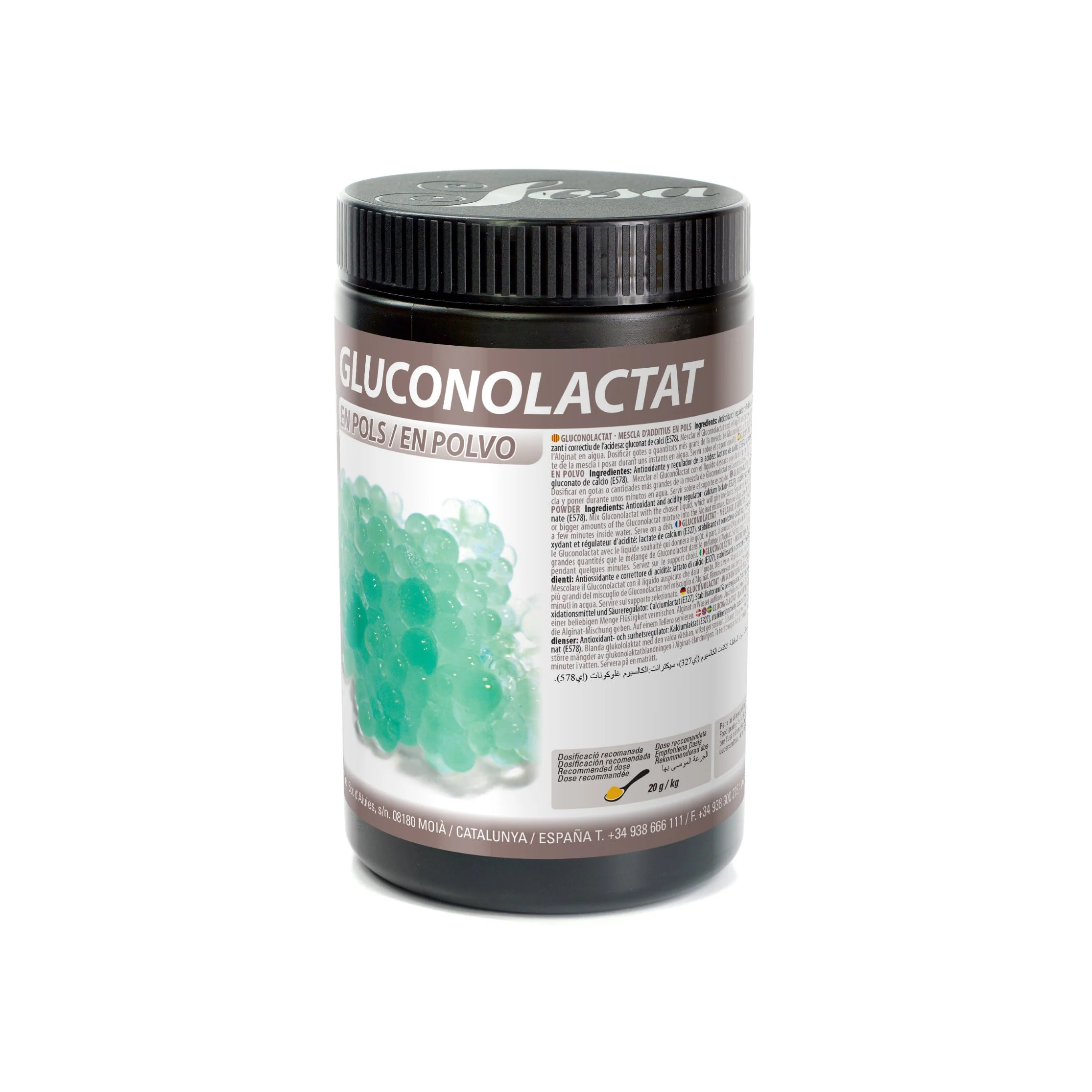
Calcium Gluconolactate is a blend of calcium gluconate and calcium lactate, specially formulated to increase the calcium content of liquids without altering their flavour. This makes it ideal for reverse spherification, where the base liquid must contain calcium to form a gel coating when submerged in a sodium alginate bath.
Unlike calcium chloride, which can impart bitterness, Calcium Gluconolactate is completely tasteless, allowing chefs to work with delicate or sweet ingredients while maintaining the integrity of their flavours.
Functional Properties
-
Enriches liquids with calcium without affecting taste
-
Enables reverse spherification with alginate baths
-
Ideal for dairy-free, low-calcium, or clarified liquids
-
Dissolves easily into mixtures without the need for agitation
Use & Preparation
-
Add directly to the liquid you wish to spherify
-
Blend until fully dissolved
-
No impact on aroma or taste
Applications
-
Reverse spherification for fruit juices, cocktails, purées
-
Use with sodium alginate baths to create stable spheres with liquid interiors
-
Useful in modernist pastry, plated desserts, and fine dining presentations
Recommended Dosage
-
20 g per kg of liquid
Suitability
-
Vegan and vegetarian friendly
-
Tasteless, food-grade formulation
-
Suitable for both sweet and savoury applications
Product of Spain
=====
DIRECT SPHERIFICATION:
To make direct spherification, basically three baths are used:
- In the first we will put the product that we want to spherify together with Alginate. We will apply turmix, leaving it at rest until the total loss of air. The acidity level of the product must be taken into account: if it has a pH of less than 4 in this same bath, we will add sodium citrate (pH Kit) in the right amount. If we exceed it, we will give the product a bad taste.
- In the second bathroom with Chloride. They will put 5 to 8 g per liter, depending on the size of the sphere. The Alginate reaction occurs when it comes into contact with the Chloride bath, forming a layer that will gel inwards. The more time elapses in the bath, the more gelled it will be, until it is completely gelled.
- In the third and last bath we will put water, which will be used to clean the spheres, basically to remove the bad taste produced by calcium chloride.
REVERSE SPHERIFICATION:
Those liquids, which by their very nature contain calcium, such as dairy products, must be spherified in reverse, that is, inverting the first two baths. The same will happen with products to which Gluconolactate is added. We also work with three baths:
- In the first we will put the product with its own calcium or with Gluconolactate. If the product does not have the appropriate density, we will add 6 g of Gelespessa (2 g Xanthan) per kilo, in order to obtain enough weight so that the sphere we form can be submerged in the second bath.
- In the second bath we will put a liter of mineral water (without calcium) with 5 g of Alginate.
- In the third and last bath we will put plain water to clean the spheres. Thanks to the inversion of baths, a sphere is obtained that always remains liquid on the inside, since the layer that forms gels on the outside.
=====
Product Information
Product Information
Shipping & Returns
Shipping & Returns
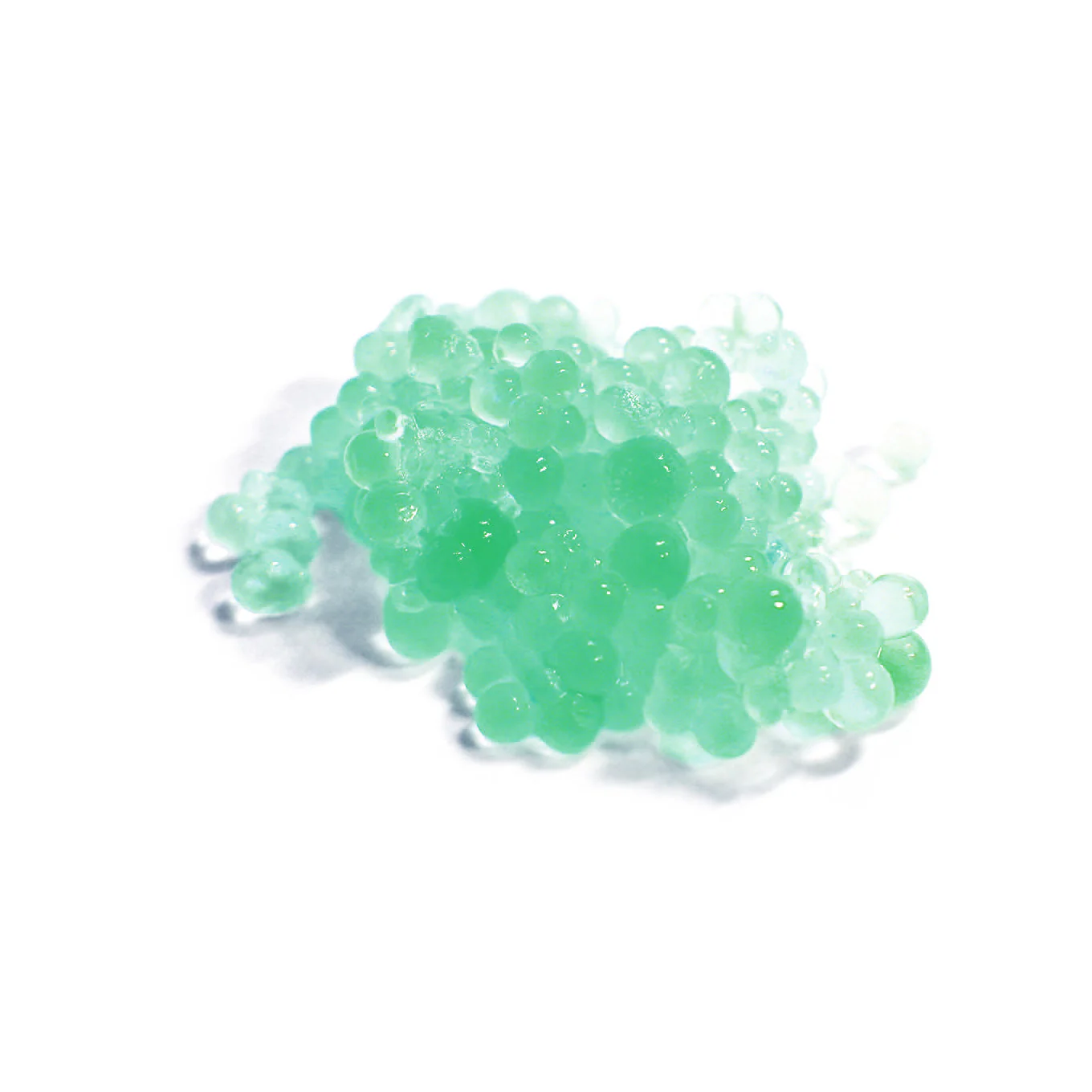
SOSA Gluconolactate – For Reverse Spherification - Canadian Distribution - Ships Free Within Canada on Orders Above CAD $199
SOSA Gluconolactate – For Reverse Spherification - Canadian Distribution - Ships Free Within Canada on Orders Above CAD $199
SOSA Gluconolactate – For Reverse Spherification - Canadian Distribution - Ships Free Within Canada on Orders Above CAD $199
Calcium Gluconolactate is a blend of calcium gluconate and calcium lactate, specially formulated to increase the calcium content of liquids without altering their flavour. This makes it ideal for reverse spherification, where the base liquid must contain calcium to form a gel coating when submerged in a sodium alginate bath.
Unlike calcium chloride, which can impart bitterness, Calcium Gluconolactate is completely tasteless, allowing chefs to work with delicate or sweet ingredients while maintaining the integrity of their flavours.
Functional Properties
-
Enriches liquids with calcium without affecting taste
-
Enables reverse spherification with alginate baths
-
Ideal for dairy-free, low-calcium, or clarified liquids
-
Dissolves easily into mixtures without the need for agitation
Use & Preparation
-
Add directly to the liquid you wish to spherify
-
Blend until fully dissolved
-
No impact on aroma or taste
Applications
-
Reverse spherification for fruit juices, cocktails, purées
-
Use with sodium alginate baths to create stable spheres with liquid interiors
-
Useful in modernist pastry, plated desserts, and fine dining presentations
Recommended Dosage
-
20 g per kg of liquid
Suitability
-
Vegan and vegetarian friendly
-
Tasteless, food-grade formulation
-
Suitable for both sweet and savoury applications
Product of Spain
=====
DIRECT SPHERIFICATION:
To make direct spherification, basically three baths are used:
- In the first we will put the product that we want to spherify together with Alginate. We will apply turmix, leaving it at rest until the total loss of air. The acidity level of the product must be taken into account: if it has a pH of less than 4 in this same bath, we will add sodium citrate (pH Kit) in the right amount. If we exceed it, we will give the product a bad taste.
- In the second bathroom with Chloride. They will put 5 to 8 g per liter, depending on the size of the sphere. The Alginate reaction occurs when it comes into contact with the Chloride bath, forming a layer that will gel inwards. The more time elapses in the bath, the more gelled it will be, until it is completely gelled.
- In the third and last bath we will put water, which will be used to clean the spheres, basically to remove the bad taste produced by calcium chloride.
REVERSE SPHERIFICATION:
Those liquids, which by their very nature contain calcium, such as dairy products, must be spherified in reverse, that is, inverting the first two baths. The same will happen with products to which Gluconolactate is added. We also work with three baths:
- In the first we will put the product with its own calcium or with Gluconolactate. If the product does not have the appropriate density, we will add 6 g of Gelespessa (2 g Xanthan) per kilo, in order to obtain enough weight so that the sphere we form can be submerged in the second bath.
- In the second bath we will put a liter of mineral water (without calcium) with 5 g of Alginate.
- In the third and last bath we will put plain water to clean the spheres. Thanks to the inversion of baths, a sphere is obtained that always remains liquid on the inside, since the layer that forms gels on the outside.
=====
Original: $24.50
-65%$24.50
$8.57Product Information
Product Information
Shipping & Returns
Shipping & Returns
Description
SOSA Gluconolactate – For Reverse Spherification - Canadian Distribution - Ships Free Within Canada on Orders Above CAD $199
Calcium Gluconolactate is a blend of calcium gluconate and calcium lactate, specially formulated to increase the calcium content of liquids without altering their flavour. This makes it ideal for reverse spherification, where the base liquid must contain calcium to form a gel coating when submerged in a sodium alginate bath.
Unlike calcium chloride, which can impart bitterness, Calcium Gluconolactate is completely tasteless, allowing chefs to work with delicate or sweet ingredients while maintaining the integrity of their flavours.
Functional Properties
-
Enriches liquids with calcium without affecting taste
-
Enables reverse spherification with alginate baths
-
Ideal for dairy-free, low-calcium, or clarified liquids
-
Dissolves easily into mixtures without the need for agitation
Use & Preparation
-
Add directly to the liquid you wish to spherify
-
Blend until fully dissolved
-
No impact on aroma or taste
Applications
-
Reverse spherification for fruit juices, cocktails, purées
-
Use with sodium alginate baths to create stable spheres with liquid interiors
-
Useful in modernist pastry, plated desserts, and fine dining presentations
Recommended Dosage
-
20 g per kg of liquid
Suitability
-
Vegan and vegetarian friendly
-
Tasteless, food-grade formulation
-
Suitable for both sweet and savoury applications
Product of Spain
=====
DIRECT SPHERIFICATION:
To make direct spherification, basically three baths are used:
- In the first we will put the product that we want to spherify together with Alginate. We will apply turmix, leaving it at rest until the total loss of air. The acidity level of the product must be taken into account: if it has a pH of less than 4 in this same bath, we will add sodium citrate (pH Kit) in the right amount. If we exceed it, we will give the product a bad taste.
- In the second bathroom with Chloride. They will put 5 to 8 g per liter, depending on the size of the sphere. The Alginate reaction occurs when it comes into contact with the Chloride bath, forming a layer that will gel inwards. The more time elapses in the bath, the more gelled it will be, until it is completely gelled.
- In the third and last bath we will put water, which will be used to clean the spheres, basically to remove the bad taste produced by calcium chloride.
REVERSE SPHERIFICATION:
Those liquids, which by their very nature contain calcium, such as dairy products, must be spherified in reverse, that is, inverting the first two baths. The same will happen with products to which Gluconolactate is added. We also work with three baths:
- In the first we will put the product with its own calcium or with Gluconolactate. If the product does not have the appropriate density, we will add 6 g of Gelespessa (2 g Xanthan) per kilo, in order to obtain enough weight so that the sphere we form can be submerged in the second bath.
- In the second bath we will put a liter of mineral water (without calcium) with 5 g of Alginate.
- In the third and last bath we will put plain water to clean the spheres. Thanks to the inversion of baths, a sphere is obtained that always remains liquid on the inside, since the layer that forms gels on the outside.
=====